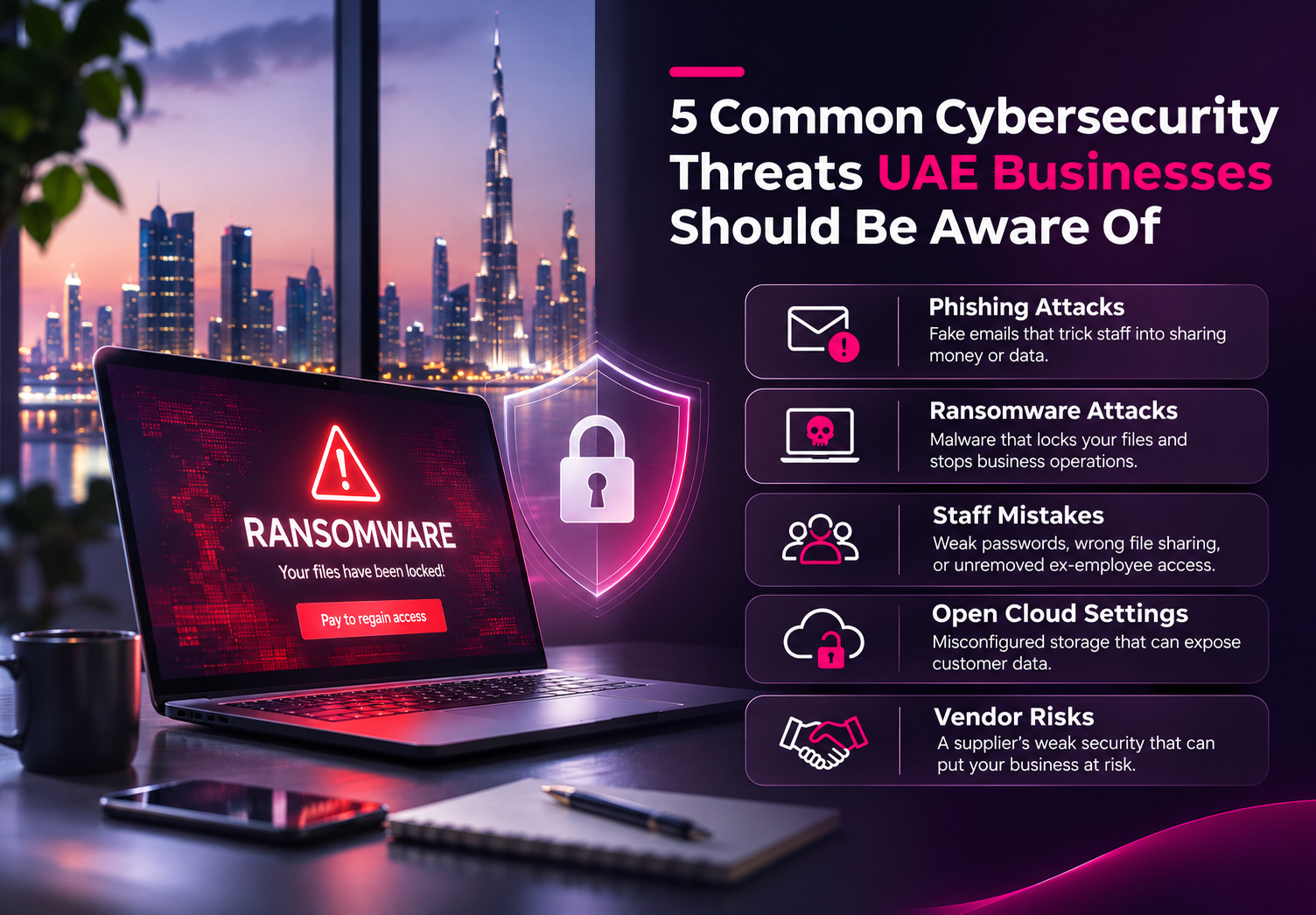
A lot of UAE companies now run on online payments, cloud storage and digital government portals. That is convenient, and it also gives attackers more doors to try. The cybersecurity threats in UAE offices are growing every year, and small firms get hit as often as large ones. Knowing the main business cybersecurity risks is a good place to start. So here are five.
Most phishing attacks are simple. An accountant gets a message that looks like it came from the managing director. It asks for a quick bank transfer before the end of the day. She sends it, and the money is gone.
Scammers copy banks, courier companies and government offices too, in both English and Arabic. Before anyone clicks or pays, they should check the sender’s address and call the person if anything feels rushed.
Ransomware attacks lock up your files until you pay. Hospitals, logistics firms and property companies are common targets, and so are small offices with no IT staff. Even two days of downtime can cost more than most owners expect.
Ransomware is one of the most disruptive cybersecurity threats in UAE companies, mainly because it spreads fast. Keep a backup offline and install software updates when they appear. If you do not have an IT team, managed cybersecurity services can watch your systems for you.
Not every problem comes from hackers. A weak password, a file sent to the wrong person or a personal phone used for work can open a gap. A former employee who still has login access is another one that gets missed.
These are quiet business cybersecurity risks, and fixing them costs very little. A few changes help a lot.
Moving files to the cloud saves time. But one wrong setting, such as a shared folder set to public, can show customer records to anyone with the link. Data security threats like this usually start with small oversights. UAE data protection rules also expect companies to protect personal information. So a leak can bring fines as well as lost trust. A regular vulnerability assessment and penetration testing check helps find these gaps early.
Your own security may be solid. A supplier’s may not be. Attackers know this, so they often target a small vendor to reach its bigger clients. Before you sign with anyone new, ask two things.
BSeccure works with UAE businesses to find weak points in their systems before attackers do. The team also monitors for unusual activity and helps with recovery after an incident. Plans are built around the size and needs of each company. So a ten-person office and a larger firm both get advice that fits.
Phishing, ransomware, staff errors, cloud settings and vendors cause a large share of the damage. None needs a big budget to start fixing. Dealing with cybersecurity threats in UAE markets begins with a few habits that the whole team follows. If you want to know where your business stands, contact BSeccure for a security check.